


AI in Medical Diagnostics
AI reads X-rays, CT, MRI, and pathology to flag disease early — 20% fewer false negatives.
Machine learning, NLP, and computer vision across four healthcare domains.
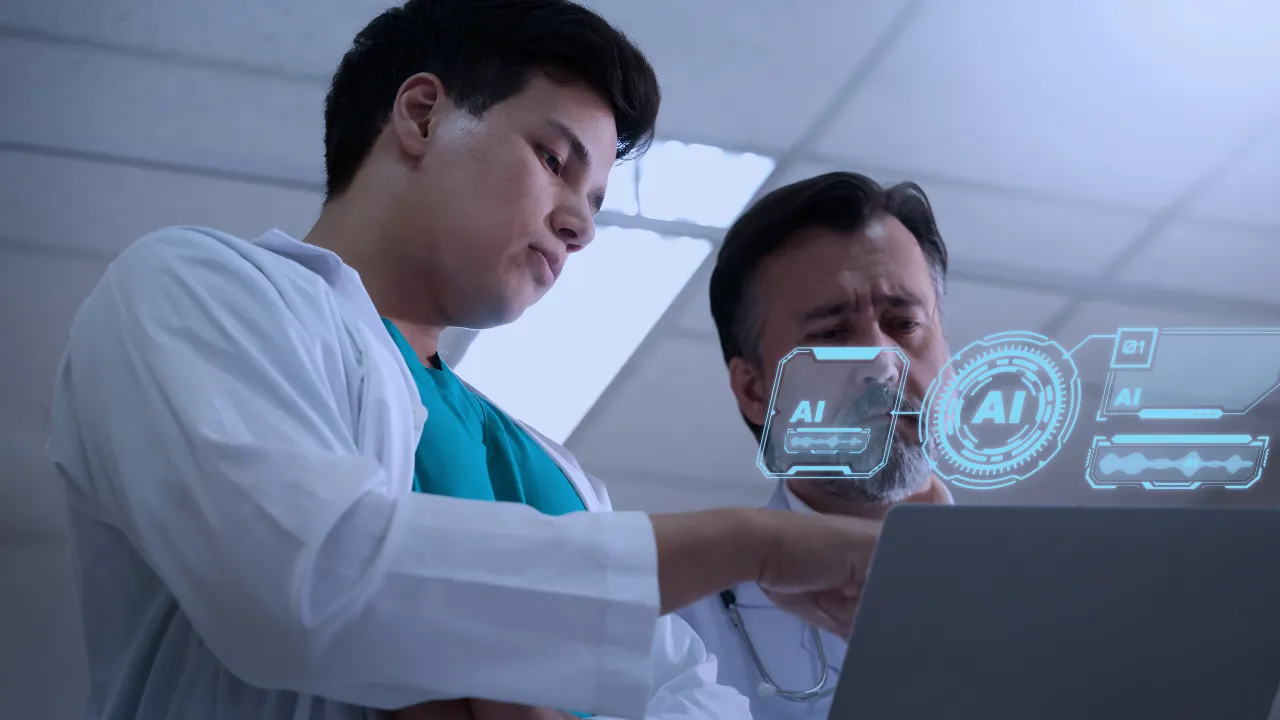
AI reads X-rays, CT, MRI, and pathology to flag disease early — 20% fewer false negatives.
Scheduling, billing, claims, and prior auth automated. AI coding hits 94%+ first-pass.
Wearables feed AI that flags deterioration early — 20–25% fewer 30-day readmissions.
History, genomics, and lifestyle data drive precision oncology and safer dosing.
Imaging, EHR notes, and labs combine to surface high-priority cases first.
AI works at two layers — point of care and back office.


Yes — AI analyzes data at a scale no clinician can, augmenting the care team.
AI compares scans against millions of prior cases to flag anomalies a reader could miss.
Imaging, EHR notes, labs, and genomics combine into one diagnostic picture.
Models retrain on outcomes data to stay current as disease patterns shift.
Each outcome ties to a specific use case.
Healthcare AI CallWhere AI delivers most in healthcare.

Clinical decision support, ambient documentation, and imaging triage.
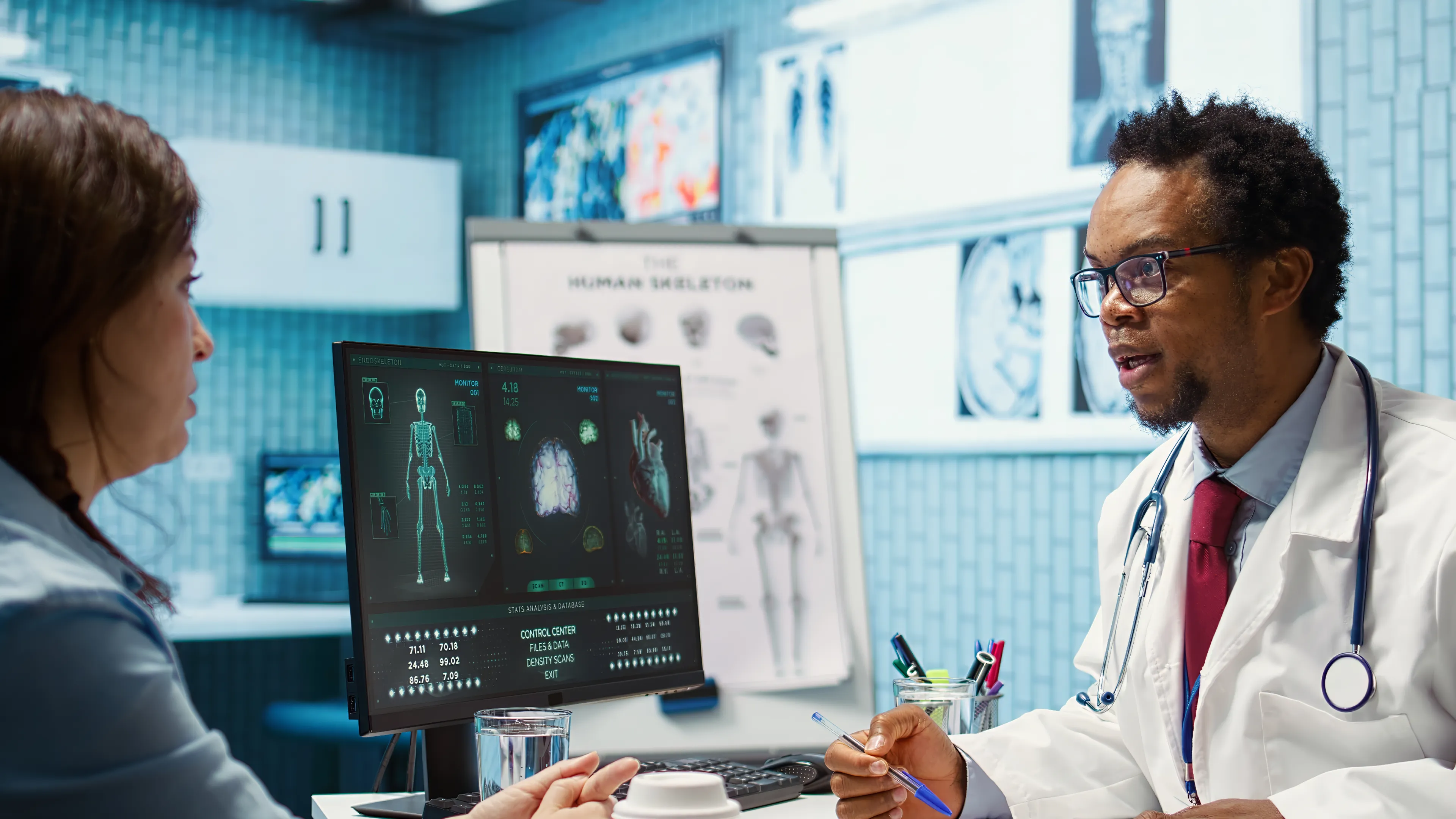
AI second reader for radiology and pathology — faster turnaround at scale.

Automated claims adjudication, fraud scoring, and prior authorization.

AI-native remote monitoring and triage on HIPAA-grade infrastructure.

Drug discovery, trial matching, and real-world evidence.
Secure, compliant AI across every framework.
Encrypted pipelines, signed BAAs, audit logging, and de-identification.
Clean integration with clinical systems — API work, not rip-and-replace.
Clinical-grade AI needs clearance; the right pathway avoids delays.
Models validated across demographic groups and monitored in production.
Explainable AI embedded in clinical workflows — augmenting, not interrupting.
Coding standards validated at every clinical and billing touchpoint.
We help hospitals, payers, and health-tech teams deploy compliant AI — imaging, decision support, and RCM automation.
Book Free Consultation
100 Fastest Growth Companies

Global Spring Winner
Top App Development Company

AWS Partner Network
Google Cloud Partner
Highly Rated on Trustpilot

Verified Agency
Top App Development Company

ASSOCHAM Member
AI is reshaping every layer of the medical industry — diagnostics, imaging, administrative automation, drug discovery, and personalized medicine. The result is faster diagnosis, lower costs, and better patient outcomes.
No. AI handles repetitive tasks — image triage, documentation, data lookup — so doctors can focus on judgment and complex decisions. Studies consistently show clinicians and AI together outperform either alone.
Yes, when built correctly — with encrypted pipelines, signed BAAs, audit logging, role-based access, and de-identification. Choose vendors with proven HIPAA, HITRUST, and SOC 2 credentials.
A focused MVP — triage assistant or claims-coding tool — can launch in 8–16 weeks. Enterprise deployments like EHR-integrated copilots or FDA-cleared diagnostic devices typically run 6–18 months.
Costs range from ~$50K for a proof-of-concept to $500K+ for fully integrated, regulatory-cleared platforms — depending on data complexity, EHR integrations, and MLOps requirements.